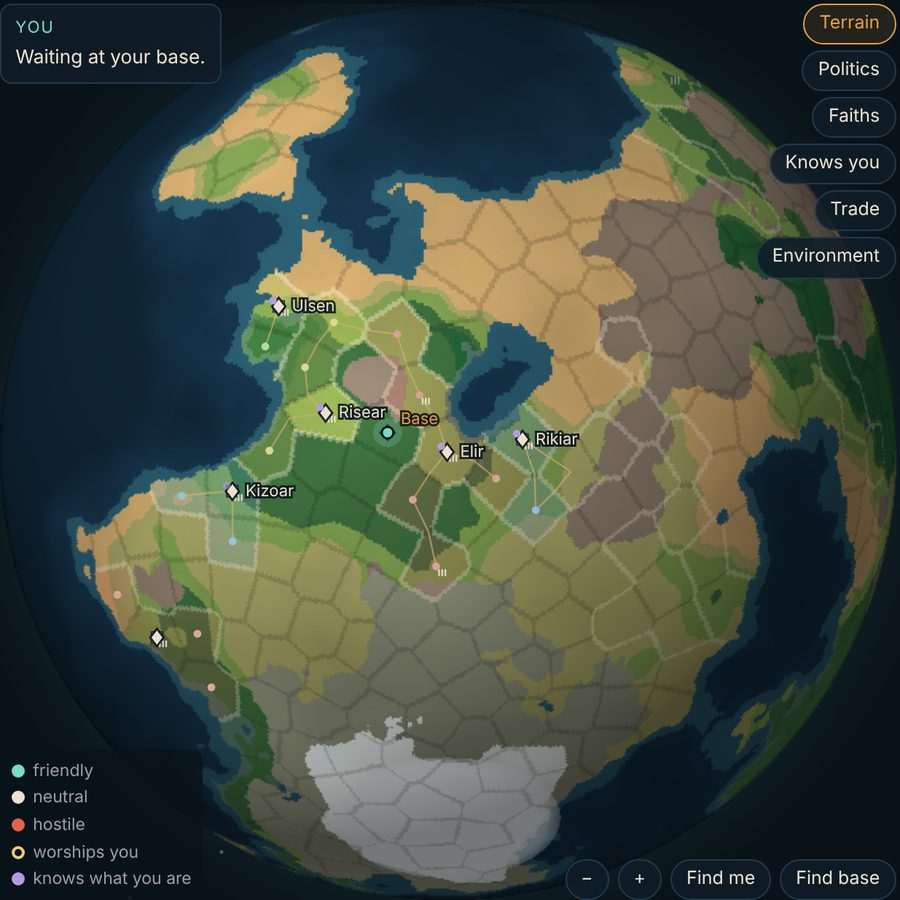
Following the news that Anthropic had forbidden Claude from just recreating games for its users, I was curious how easy it would be to design and implement a game from scratch.
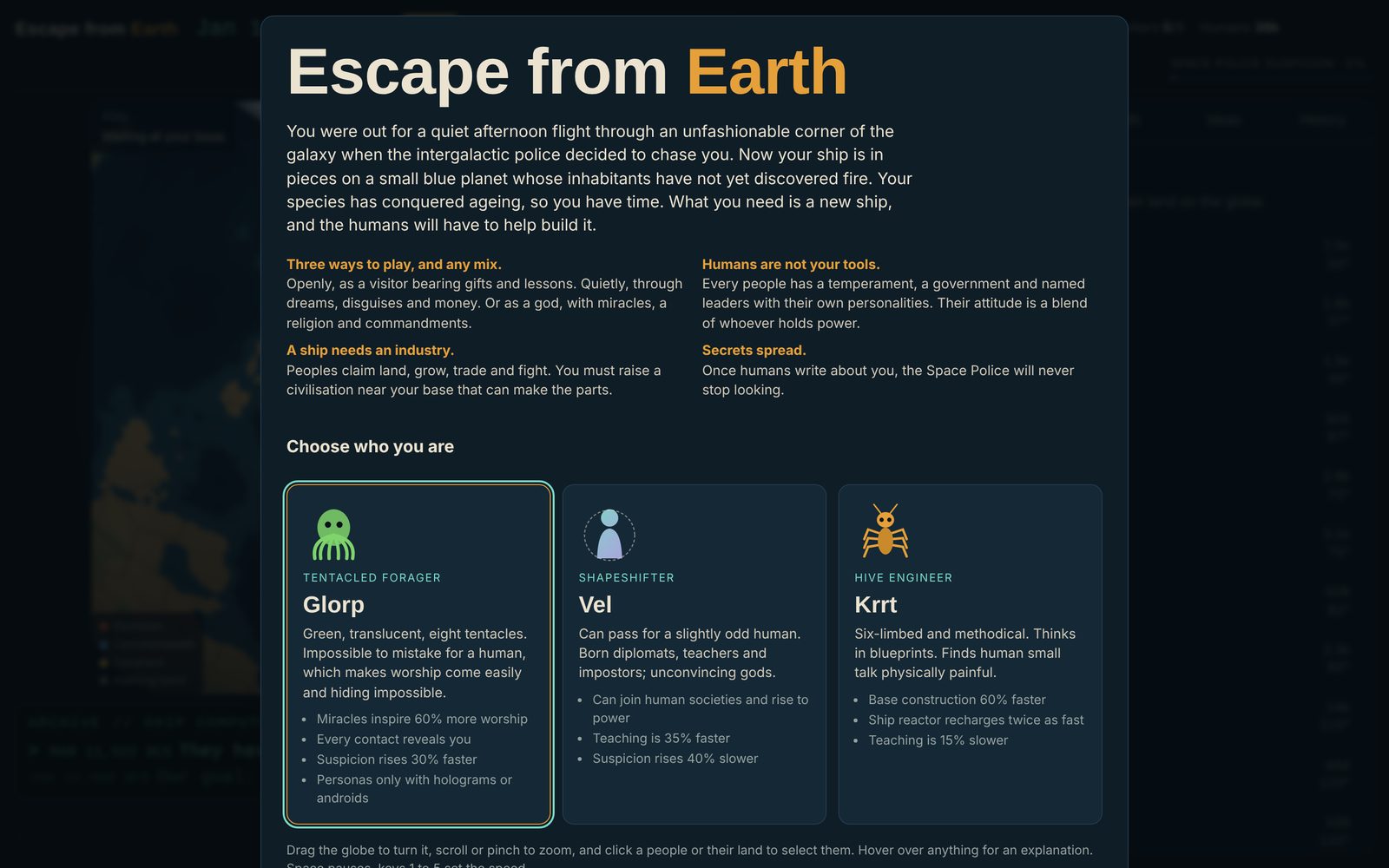
I dug out a game concept, Escape from Earth, that I had written back in my university days, but never implemented. The core idea was that you are a somewhat clueless alien who crash-landed on prehistoric Earth and needed to get humanity up to speed on technology and civilisation so they can fix your spaceship. The document I found was a short, three-page write-up with some details, but not much else.
- VERSION 117 min
The old concept dropped in as is. A cute, fully playable game, but too easy.
- VERSION 210 min
A few suggestions: more conflict, more difficulty, more on the map.
- VERSION 330 min
Built from a longer design document written together with Claude.
ITERATION 1Just build it
In the first iteration I just dropped the document into Claude Opus 5.5 and asked it to build the game. After 17 minutes, no high effort, I had the first playable prototype. It was an HTML file that was surprisingly only about 100 KB. Loading it up revealed a cute, fully playable game, including all the features I outlined in the brief. I watched a friend of mine play through the game, and we concluded that it was a bit too easy, and offered little conflict. I also found that there was not a lot happening on the globe.
ITERATION 2More conflict
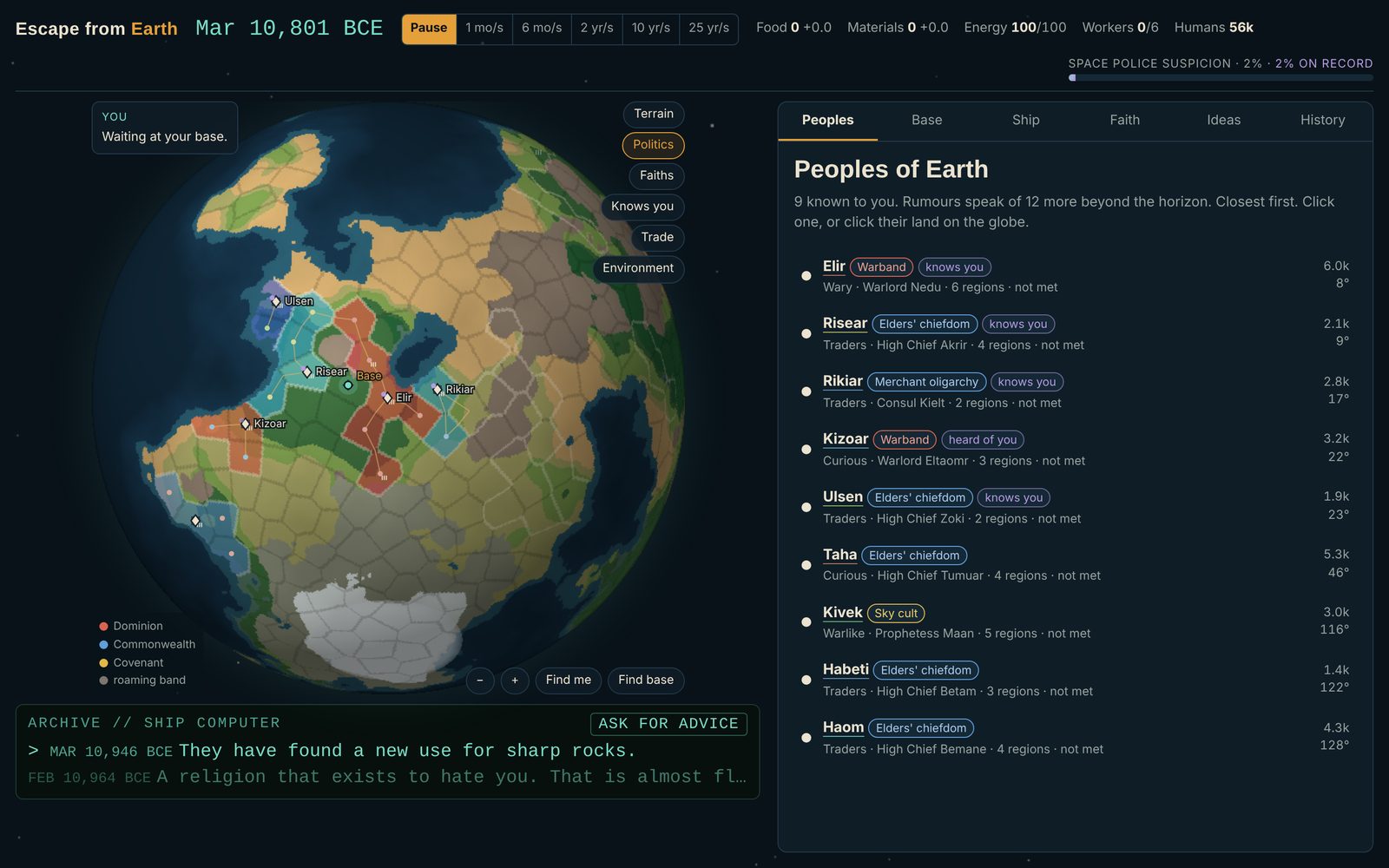
I simply gave a few more suggestions, asking it to add more conflict and difficulty, and adding some more elements that utilise the map, and some additional interactions with the people. A second version was quickly put together by Claude, and after another 10 minutes, we could play that one as well. This one was a bit more challenging, but the game felt a bit too simple.
ITERATION 3Design first, then build
For the third iteration I first had a longer design discussion with Claude. I wrote out some more detailed feature lists, and first developed a longer design document with Claude. The final design doc is linked here as well:
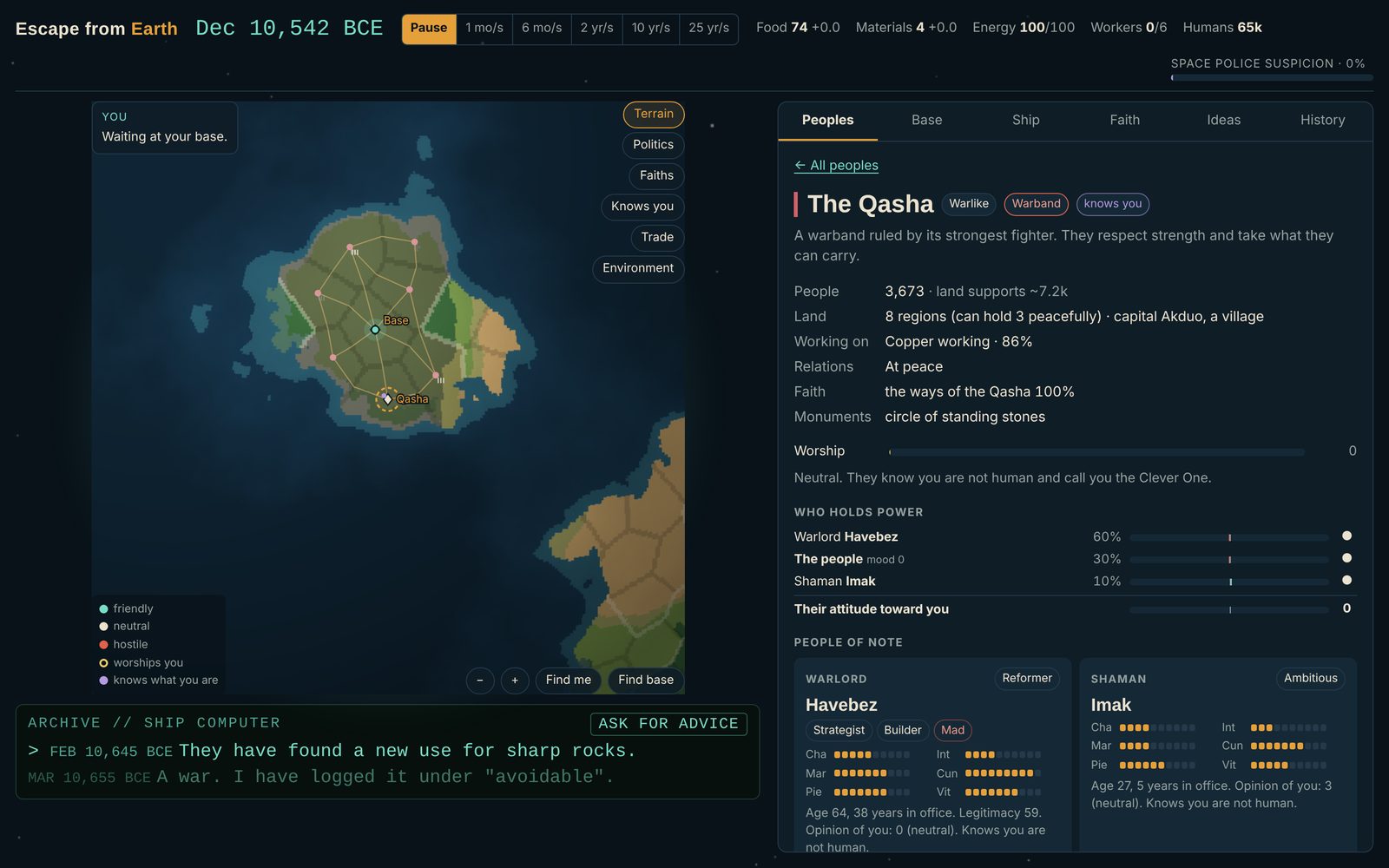
Claude then built version three, which you can play by clicking below. It took another 30 minutes, and yielded a respectable browser game.
Play Escape from Earth
Runs in the browser, on desktop or tablet. Your game is saved in the browser as you play.
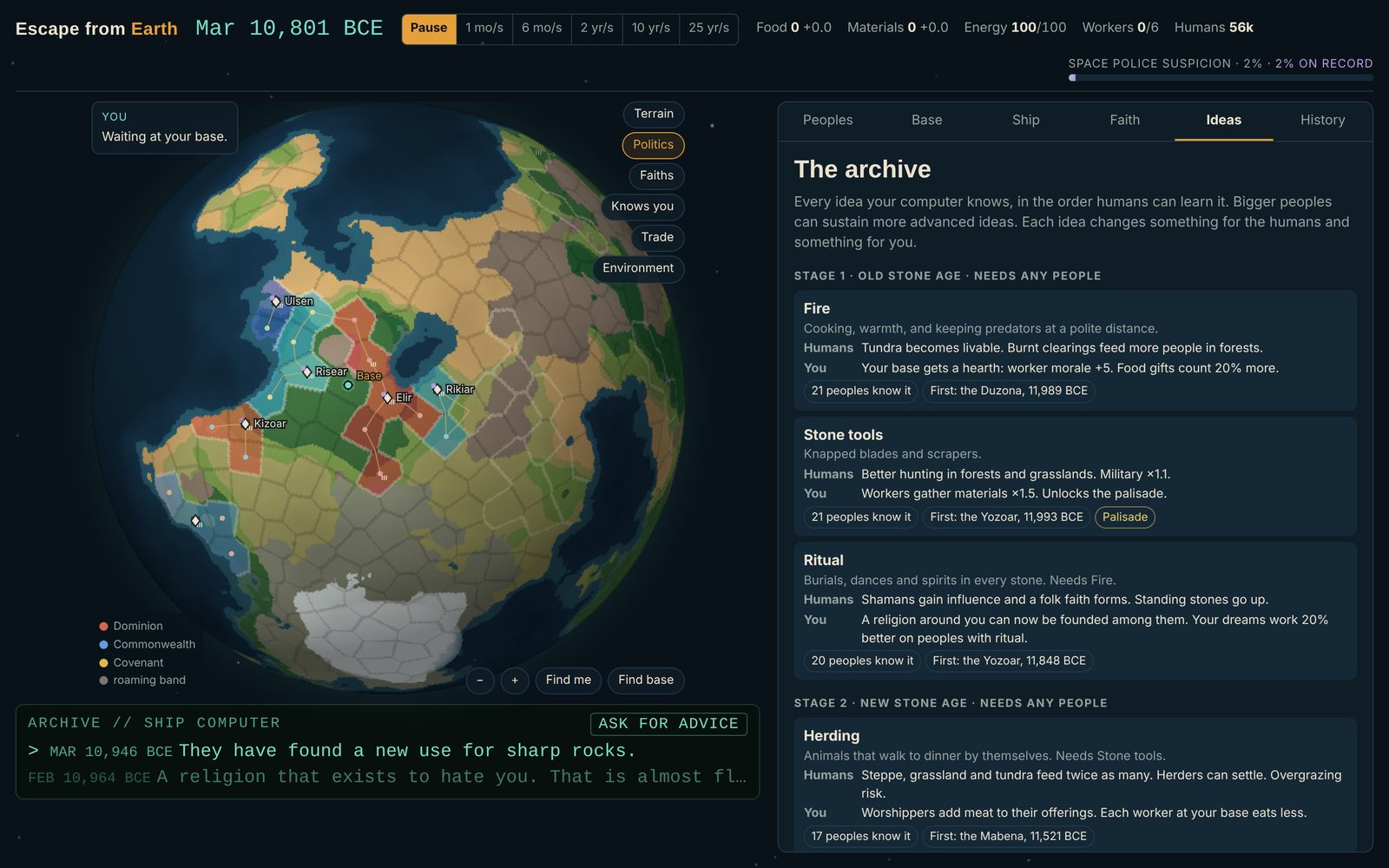
VERDICTNot perfect, but impressive
The game still has some issues: the interface, interaction and design might be a bit bloated at the moment, not everything is intuitive, and some elements might not meaningfully contribute to the game loop. But overall, I was quite impressed by how I could get from a simple existing idea, spending a few hours on design instructions and about an hour of LLM implementation, to a functioning game.